ISSN: 2979-9236|DOI: 10.58190/imiens|Open Access|Peer-Reviewed
Intelligent Methods In Engineering Sciences
Vol. 4 • Issue 25 Published Articles

Volume 4, Issue 2 (2025)

Published: August 30, 2025

The Intelligent Methods in Engineering Sciences (Vol. 4, No. 2, 2025) showcases a compelling selection of research that advances intelligent techniques across diverse engineering disciplines. This issue features innovative contributions in areas such as multispectral image-based plant disease detection, deep learning-driven object recognition in retail analytics, optimization in cryptographic systems, transformer-based segmentation for radiotherapy, and novel numerical methods for solving nonlinear partial differential equations. Together, these studies highlight the growing influence of intelligent systems in tackling complex, real-world engineering challenges.

Table of Contents (5 Articles)

Full Text & Open Access
Fusion-Aware Lightweight CNN with Channel-Wise Attention for Rose Leaf Disease Classification in Multispectral Color Domains
Research Articleslock_openOpen Access
pp. 15-21

Fusion-Aware Lightweight CNN with Channel-Wise Attention for Rose Leaf Disease Classification in Multispectral Color Domains

Yusuf YamanEsra Kaya

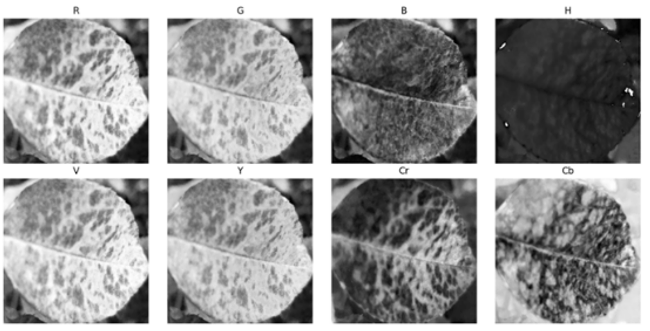
The rose plant holds significant economic and cultural value, not only as an ornamental species but also due to its widespread use across various industrial domains such as cosmetics, medicine, and perfumery. In this context, the early and accurate detection of leaf diseases is crucial for ensuring the healthy cultivation of rose plants. This study presents a novel approach that integrates image processing and deep learning techniques for the detection of common leaf diseases in rose plants. The proposed method utilizes the RoseNet dataset, which consists of three classes: Black Spot, Downy Mildew, and Fresh Leaf. Input images were converted into RGB, HSV, and YCrCb color spaces and then fused at the channel level to enhance spectral diversity and improve the model's learning capacity. The developed convolutional neural network (CNN) architecture was enriched with channel attention mechanisms, namely Squeeze-and-Excitation (SE) and Efficient Channel Attention (ECA) blocks. Class imbalance issues were addressed through class weighting and label smoothing strategies. The model's performance was evaluated using multiple metrics such as accuracy, precision, recall, and F1-score. Achieving an accuracy of 95.65%, the proposed model outperformed widely used CNN architectures in the literature. Furthermore, with a low parameter count (1.03M) and a fast test time (376 ms), the model is well-suited for deployment on embedded systems. The findings demonstrate that attention mechanisms are effective in enhancing class discrimination, particularly in low-sample-size datasets. Thus, the proposed model offers a reliable, cost-effective, and AI-based solution for the diagnosis of plant leaf diseases.
visibility771file_download460
Object Detection and Visual Intelligence in Retail Environments: A Deep Learning Approach for Inventory and Behavior Analytics
Research Articleslock_openOpen Access
pp. 22-28

Object Detection and Visual Intelligence in Retail Environments: A Deep Learning Approach for Inventory and Behavior Analytics

Hewa Zangana

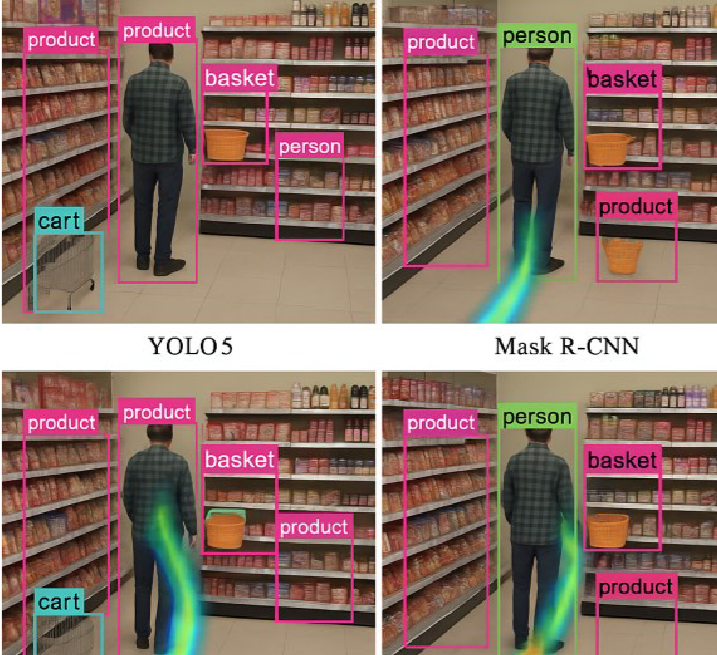
The integration of visual intelligence technologies in retail environments has revolutionized inventory tracking and customer behavior analysis. This study proposes a comprehensive deep learning-based framework that leverages advanced object detection models to enhance retail operations through real-time visual insights. Our method integrates state-of-the-art architectures such as YOLOv8 and Mask R-CNN to accurately identify, track, and classify products on shelves while simultaneously analyzing shopper interactions and movement patterns. By utilizing annotated datasets collected from real-world retail scenarios, the system demonstrates high accuracy in both inventory status recognition and behavioral inference, outperforming traditional sensor-based methods. Furthermore, we introduce a hybrid loss function and a scene-aware postprocessing module that improves detection in occluded or dynamic environments. The experimental results show that our approach enables automated planogram compliance checks, customer heatmap generation, and actionable analytics, thus supporting intelligent decision-making for retailers. This research contributes a scalable and real-time visual system that bridges the gap between deep learning and practical retail intelligence.

visibility1,061file_download579
Binary Aquila Optimizer with Taper-Shaped Transfer Function: An Application for Merkle-Hellman Knapsack Cryptosystems
Research Articleslock_openOpen Access
pp. 29-37

Binary Aquila Optimizer with Taper-Shaped Transfer Function: An Application for Merkle-Hellman Knapsack Cryptosystems

Gülnur Yıldızdan

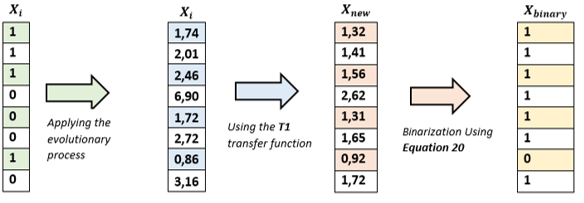
Metaheuristic algorithms are powerful methods used to solve large and complex optimization problems. Thanks to their flexibility, they provide effective results in various fields and also have an important place in security applications such as the Merkle-Hellman Knapsack Crypto System. Aquila Optimizer is an optimization algorithm inspired by the hunting behavior of aquilas. It provides fast and effective solutions to complex problems. In this study, Aquila Optimizer is discretized using taper-shaped transfer functions. Taper-shaped transfer functions help the algorithm obtain more precise and effective results by increasing its performance. Four BinAO versions obtained in this way were tested on the Merkle-Hellman Knapsack Cryptosystem. In the tests conducted for the cryptanalysis of "CAT" and "MACRO" messages, the version achieved more successful results. Additionally, tests conducted with the algorithms in the literature clearly showed that the proposed algorithm is successful and effective.

visibility569file_download514
Dual-Scale Transformer-Guided Attention Network for Efficient Multi-OAR Segmentation in Head and Neck Radiotherapy
Research Articleslock_openOpen Access
pp. 38-53

Dual-Scale Transformer-Guided Attention Network for Efficient Multi-OAR Segmentation in Head and Neck Radiotherapy

Uzma NawazHafiz Muhammad UbaidullahZubair SaeedChaudhry Muhammad Ali Nawaz

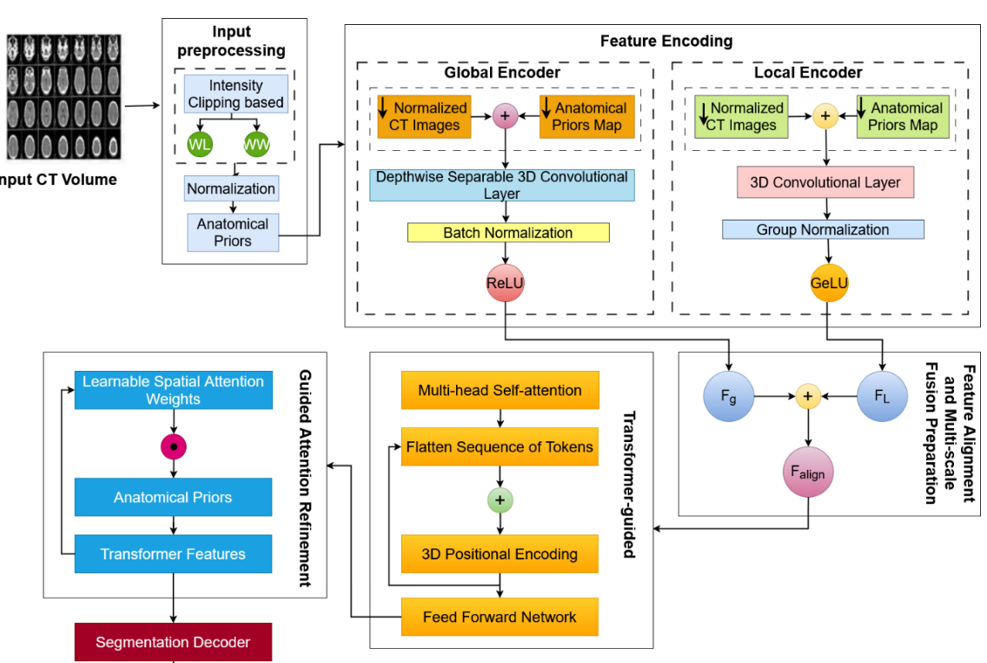
Accurate segmentation of organ-at-risk (OARs) in head and neck CT images is crucial for radiotherapy planning, but it remains a challenging task due to anatomical complexity, low soft-tissue contrast, and the presence of small, variable structures. We propose DSTANet, a novel dual-scale transformer-guided attention network that integrates multi-resolution encoding, transformer-based global context fusion, and anatomically guided attention refinement to deliver precise multi-OAR segmentation. Unlike traditional CNN-based methods, DSTANet effectively models long-range spatial dependencies while preserving high-resolution boundary detail. On the HNSCC-3DCT-RT dataset, DSTANet achieved a mean Dice Score of 97.5% and a mean 95 th percentile Hausdorff Distance (HD95) of 2.32 mm, while on the MICCAI 2015 benchmark dataset, it achieved 90.0% Dice, which surpasses several state-of-the-art approaches both in terms of overlap and geometric accuracy. These results, combined with a sub-20-second inference time, establish DSTANet as a robust and clinically viable solution for automated head and neck OAR segmentation.

visibility1,062file_download616
A Fixed-Grid Rdtm-Based Computational Strategy for Nonlinear Partial Differential Equations
Research Articleslock_openOpen Access
pp. 54-65

A Fixed-Grid Rdtm-Based Computational Strategy for Nonlinear Partial Differential Equations

Sema ServiGalip Oturanç

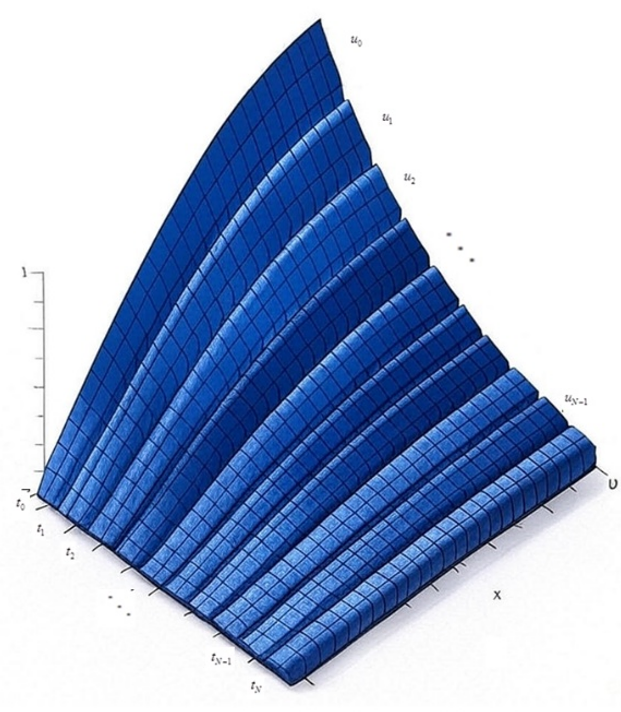
In this study, a fixed-grid version of the Reduced Differential Transform Method (RDTM) is systematically implemented to obtain approximate solutions of linear and nonlinear partial differential equations. In this method, the solution range is divided into equal subregions and the fixed-grid algorithm is integrated into the RDTM framework. This approach provides an efficient and orderly computational process for solving complex partial differential equations. The effectiveness of the proposed method is demonstrated on the homogeneous Klein–Gordon equation (a representative hyperbolic equation) and the nonlinear Klein–Gordon equation, and the obtained approximate solutions are compared with known analytical solutions with high accuracy and consistency. Furthermore, the proposed fixed-grid RDTM (FGS-RDTM) framework offers potential integration with intelligent systems where accurate and efficient numerical solvers are required for modeling, control, and learning in dynamic environments. These results confirm the reliability and practical usefulness of the new method in addressing nonlinear partial differential equations in the context of intelligent computational systems.

visibility852file_download420