Classification of Diseases in Tomato Leaves Using Deep Learning Methods
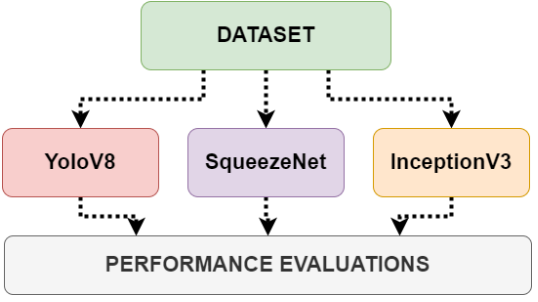
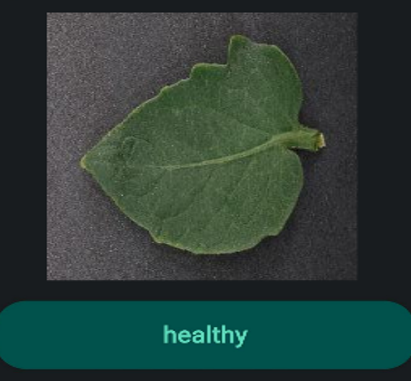
The automatic detection of diseases in tomato leaves significantly contributes to tomato production and enables farmers to manage these issues more effectively. Tomatoes are a crucial commercial crop for local markets and exports, representing a significant agricultural sector in our country. Diseases affecting tomato leaves directly influence tomato yield and quality, making early detection and intervention paramount. Our study aims to address tomato losses due to leaf diseases using computer technology. Recently, Convolutional Neural Networks (CNN) have been employed in various fields including agriculture, military, robotics, and medicine for classification, object detection, and segmentation tasks. The integration of computer vision and image processing with deep learning architectures has led to notable advancements in these areas, offering solutions with higher accuracy and reducing human error. In our research, a dataset was created using images of tomato leaf diseases selected from Kaggle. Algorithms such as k-Nearest Neighbors (KNN), Random Forest (RF), Logistic Regression (LR), Support Vector Machine (SVM), and Neural Networks (NN) were applied using Orange, a data visualization and analysis software. Moreover, a custom algorithm developed in Python demonstrated the highest accuracy. while the highest classification accuracy of classification made with machine learning algorithms was 95.6%, the classification accuracy was achieved about 96% with the developed deep learning model. This system was integrated into an Amazon Web Services (AWS) Lambda function, subsequently utilized in a mobile application developed using Flutter for the UI and Dart for backend, ensuring connectivity with the Lambda function.