
ISSN: 2979-9236|DOI: 10.58190/imiens|Open Access|Peer-Reviewed
Intelligent Methods In Engineering Sciences
Vol. 3 • Issue 33 Published Articles

Volume 3, Issue 3 (2024)

Published: September 29, 2024

This issue of Intelligent Methods in Engineering Sciences (Vol. 3, No. 3, 2024) presents applied research in machine learning, focusing on algorithm performance in real-world domains. Topics include taxi time estimation at major airports, predicting student dropout, and classifying agricultural products using artificial neural networks.

Table of Contents (3 Articles)

Full Text & Open Access
Performance Evaluation of Machine Learning Algorithms in Estimating Taxi Times at Istanbul Airport
Research Articleslock_openOpen Access
pp. 82-90

Performance Evaluation of Machine Learning Algorithms in Estimating Taxi Times at Istanbul Airport

Erkan ÇömezOnur İnan

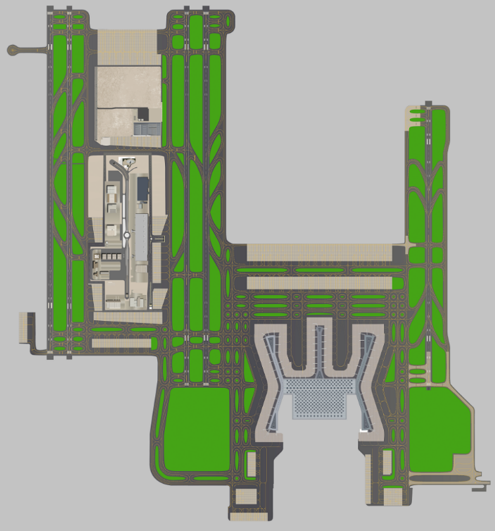
This article evaluates the performance of regression algorithms used to estimate taxi-out times at Istanbul Airport. Artificial neural networks, random forest, gradient boosting, and decision trees algorithms were studied to determine the algorithms with the highest accuracy. Principal Component Analysis (PCA) was used to reduce the data's dimensionality and improve model performance. The findings of the study provide valuable insights for more effective management of airport operations and reduction of flight delays. PCA-applied Artificial Neural Networks (ANN) emerged as the most successful algorithm, demonstrating the highest accuracy (R²: 95.89%) and lowest error margins (MAE: 0.016, MSE: 0.001) in predicting taxi-out times. This superior performance indicates that ANN can effectively capture the complex relationships and variability inherent in airport operational data. Following ANN, the PCA-applied Random Forest algorithm also showed commendable accuracy (R²: 94.89%), providing robust predictions with slightly higher error margins (MAE: 0.157, MSE: 0.044) compared to ANN. These results underline the potential of using advanced machine learning techniques to enhance the efficiency of airport operations, thereby minimizing delays and optimizing resource allocation. Overall, the application of these machine learning models, particularly ANN and Random Forest, offers a significant improvement over traditional methods. The study's outcomes suggest that incorporating these advanced algorithms can lead to more accurate predictions of taxi-out times, supporting better decision-making processes and operational strategies at airports.
visibility1,153file_download490
Predicting Student Dropout Using Machine Learning Algorithms
Research Articleslock_openOpen Access
pp. 91-98

Predicting Student Dropout Using Machine Learning Algorithms

Süleyman Alpaslan SULAKNigmet KOKLU

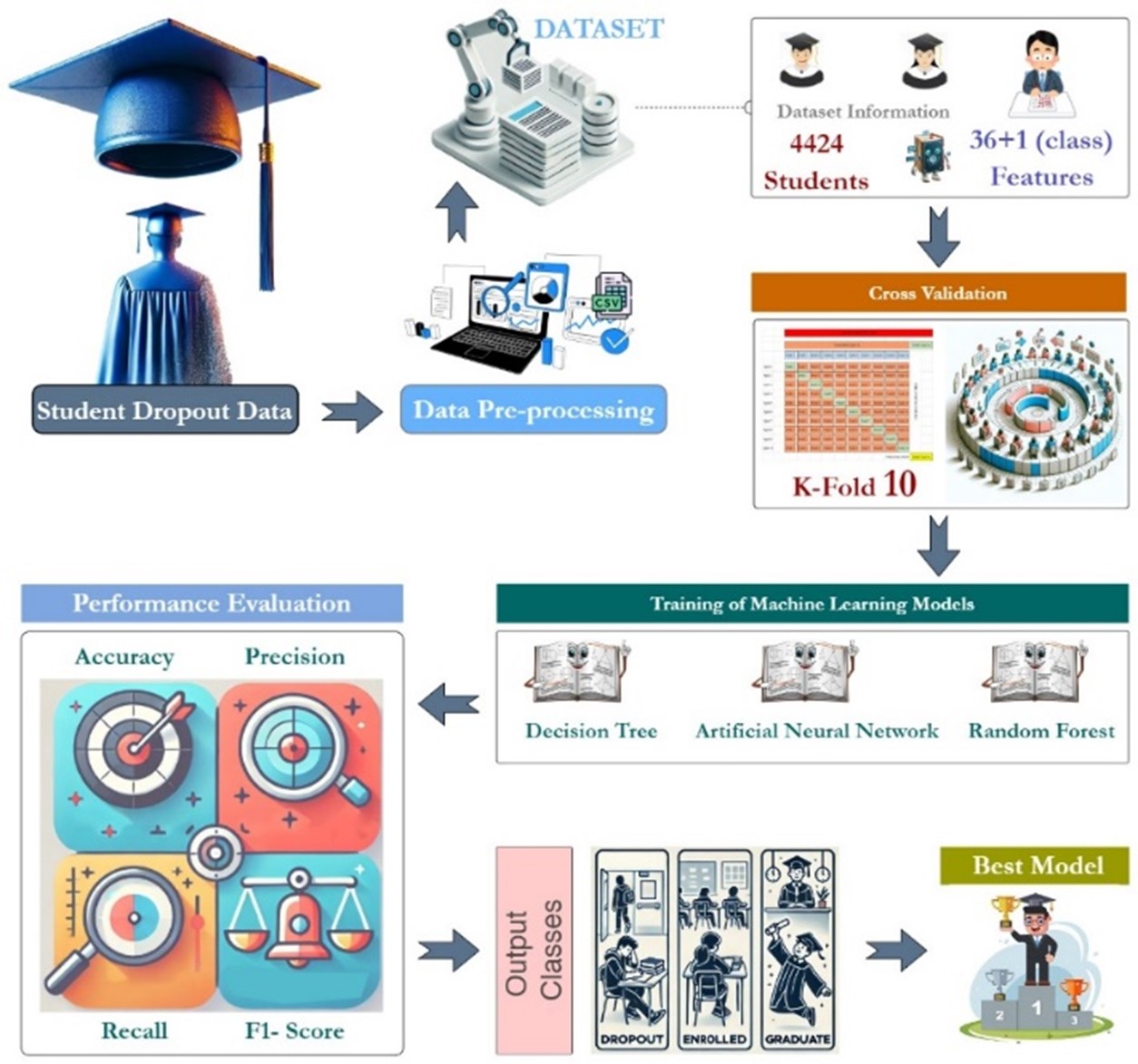
This article comprehensively examines the use of machine learning algorithms to predict and reduce student dropout rates. These methods, developed to monitor and support student achievement in education, also aimed to enhance success rates in education and ensure more effective student engagement in the learning process. Big data analysis and machine learning models provide important contributions to the development of strategic solutions to the problem of school dropout by predicting student movements and trends. This study uses a dataset consisting of 4424 student data and has 37 features. The dataset is divided into three classes: "Dropout", "Enrolled" and "Graduate" according to the students' school dropout status. Decision Tree (DT), Random Forest (RF) and Artificial Neural Network (ANN) competitions, which are frequently used in such training studies in the literature, are aimed at this dataset. According to the obtained operations, DT showed moderate performance with an accuracy rate of 70.1%. The RF algorithm showed higher success with an accuracy rate of 75.5%. The highest success was achieved by the ANN algorithm with an accuracy rate of 77.3%. ANN's flexible structure has produced superior results compared to other algorithms for this dataset, its ability provide successful classification in complex datasets. The article ultimately demonstrates how machine learning-based prediction models can have a significant impact on student achievement and offer a powerful tool for reducing school dropouts.

visibility3,961file_download1,496
Classification of Raisin Grains Using Different Artificial Neural Network Methods
Research Articleslock_openOpen Access
pp. 99-107

Classification of Raisin Grains Using Different Artificial Neural Network Methods

Hayri Incekara

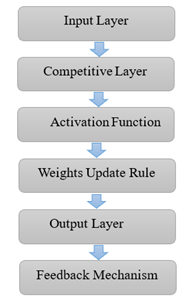
In addition to its nutritional properties, raisins are also a beneficial food in terms of health due to its vitamins, minerals, antioxidants and phenolic compounds. Turkey ranks first in global raisin production with a production capacity of 24%. Many problems are encountered in the classification of raisins according to their type and quality by traditional methods. In order to overcome these problems, artificial intelligence systems, whose usage area is increasing day by day, are utilized. In this study, raisin grains were classified using 3 different Artificial Neural Network (ANN) methods using the ‘Raisin’ dataset from the UCI Machine Learning Repository. Performance measurements of Competitive Layer Neural Network (CLNN), Pattern Recognition Artificial Neural Network (PRNN) and Self-Organizing Map (SOM) methods used in classification were performed. In the obtained performance measurements, PRNN has the highest success, while SOM is weaker compared to the other two methods. CLNN, on the other hand, remains at similar levels to PRNN and offers a good alternative to PRNN.

visibility1,180file_download703