
ISSN: 2979-9236|DOI: 10.58190/imiens|Open Access|Peer-Reviewed
Intelligent Methods In Engineering Sciences
Vol. 3 • Issue 42 Published Articles

Volume 3, Issue 4 (2024)

Published: December 29, 2024

This issue of Intelligent Methods in Engineering Sciences (Vol. 3, No. 4, 2024) features research focused on intelligent data processing and deep learning applications in industrial environments. The articles present comparative studies of algorithm performance in embedded systems and deep learning-based quality assessment techniques in metal production.

Table of Contents (2 Articles)

Full Text & Open Access
Realising Quality Control of Metal Products Used in Industry Through Deep Learning
Research Articleslock_openOpen Access
pp. 118-125

Realising Quality Control of Metal Products Used in Industry Through Deep Learning

Begüm ÖzyerYavuz Selim Taspinar

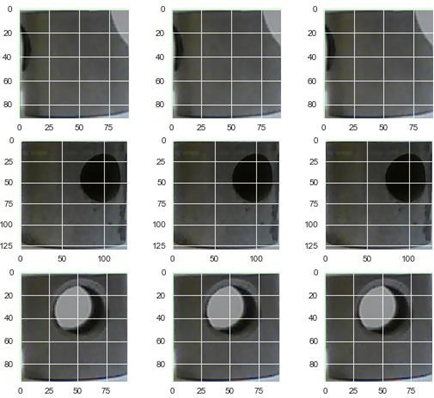
This study was carried out with the aim of detecting the defects on the surfaces of metallic products, which are frequently encountered in our daily lives and widely used in industry, with deep learning. Many metal products in the industry undergo different processes during the production phase. As a result of these processes, the detection of defects such as breakage, cracking, etc. on the surfaces of metal products is carried out by quality control personnel or production personnel. However, this error detection made by manpower both slows down production and causes overlooked errors. In order to easily detect these defects, in our study, we used a dataset consisting of 285 images in total with images of two different surface defects and images containing flawless metal parts and a CNN architecture, ResNet50 architecture, to defects. There are three classes in total in the dataset. Two of these classes consist of images of different types of defects on the surface of the metal piston part used in air conditioners, and one of them consists of images of perfect metal piston parts. Convolutional Neural Network (CNN) method was used to determine the features of the images. Precision, recall, F1-Score and accuracy metrics were used to measure the performance of the model. With the ResNet50 architecture, defects on the surfaces of metal piston parts are detected quickly and with high accuracy. As a result of the study, it was suggested that the proposed model can detect surface defects that occur in the usage areas of metal products in various sectors more quickly and accurately using deep learning. This shows that the quality control problems experienced in the industry can be reduced by using deep learning, saving time and manpower.
visibility873file_download633
Comparison of Data Reduction Algorithms for Real-Time Data Processing in Embedded Systems
Research Articleslock_openOpen Access
pp. 108-117

Comparison of Data Reduction Algorithms for Real-Time Data Processing in Embedded Systems

Abdulkadir SadaySuleyman CananIbrahim Ethem Dere

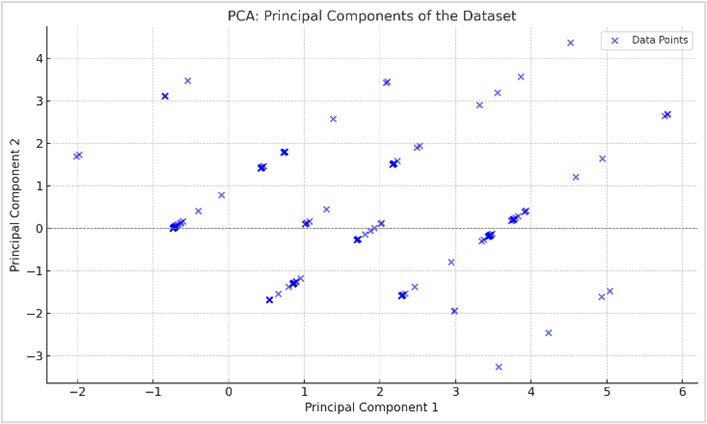
In embedded systems, large datasets are difficult to process in real-time due to limited processing power, memory capacity, and energy resources. In order to solve these difficulties, the use of algorithms that reduce data size and complexity has become a critical requirement. This study examines the techniques of five algorithms used for data reduction in embedded systems. The techniques of dimensionality reduction, numerosity reduction, data compression, data cube aggregation, and discretization algorithms are applied to a dataset. The dataset consists of load and angle data recorded every five seconds for three months. The selected data reduction techniques are evaluated to reduce data processing load, optimize storage requirements, and reduce energy consumption. The results show that each algorithm offers advantages according to different application requirements. The findings obtained in this study provide a guiding framework for the optimization of data processing processes in embedded systems. The results provide important information that can help system designers select algorithms suitable for application requirements. In the future, combining these algorithms with hybrid approaches can further increase the data processing capacity and efficiency of embedded systems.

visibility1,042file_download1,265